
Uncategorized
Real vs. Fake Peptides: The Ultimate Guide to HPLC Testing & Purity
Feb
The UK peptide and steroid market can feel like the Wild West. For every legitimate vendor offering high-grade research compounds, there are five others selling under-dosed vials, mislabeled substances, or products filled with unknown contaminants.
As a researcher, blind faith is dangerous.
You cannot determine the quality of a peptide by looking at the lyophilized (freeze-dried) powder. A vial containing 99% pure Semaglutide looks exactly the same as a vial containing 50% filler.
So, how do you know what you are buying? The answer lies in HPLC Testing.
At [Brand Name], we believe in radical transparency. In this guide, we will explain exactly what HPLC testing is, how to spot a fake lab report, and why you should never buy from a source that “grades their own homework.”
What is HPLC? (The Science Simplified)
HPLC stands for High-Performance Liquid Chromatography. It is the gold standard analytical technique used in pharmaceutical chemistry to separate, identify, and quantify each component in a mixture.
Think of it like a prism separating white light into a rainbow.
- Separation: It breaks a liquid sample down into its individual ingredients.
- Identification: It tells you what those ingredients are.
- Quantification: It tells you how much of each ingredient is present.
If a vendor cannot provide a current HPLC report for the specific batch you are buying, you are essentially gambling with your research.
How to Read a COA (Certificate of Analysis)
When you look at a lab report (often called a COA), it can look like a confusing mess of lines and numbers. Here is how to decode it in 30 seconds.
1. The Header (Verification)
Look at the top of the document.
- Third-Party Status: Is the logo on the report different from the logo of the store? If the store tests its own products internally, the results are biased and worthless. Look for independent labs (like Janoshik, MZ Biolabs, etc.).
- Date: Is the test recent? A report from 2021 tells you nothing about the batch being sold in 2024.
2. The Chromatogram (The Graph)
This is the visual representation of the substance. You will see a baseline (the bottom line) and “peaks” (spikes).
- The Main Peak: You want to see one single, tall, sharp tower. This represents the primary compound (e.g., Tirzepatide).
- The “Noise”: Small bumps or jagged lines along the bottom represent impurities, synthesis byproducts, or degradation.
- Rule of Thumb: A clean graph = A clean product. A messy graph with many small mountains = Dirty synthesis.
3. The Integration Table (The Numbers)
Below the graph, there is a data table. Focus on two columns:
- Purity (%): This should be >99.0%. Anything below 98% is generally considered low grade for research purposes.
- Concentration (Quantity): This is crucial. A vial might be 99% pure, but if it is labeled “10mg” and the test shows only “4mg” inside, you are being ripped off.
- Acceptable Variance: +/- 5% to 10% is standard in chemical manufacturing (e.g., a 10mg vial testing at 10.4mg or 9.8mg is excellent).
Common Scams: How to Spot “Fake” Testing
Unscrupulous vendors use several tricks to fool customers who don’t pay attention.
1. The “Generic Image” Scam
The vendor uploads a blurry screenshot of a lab report on their website. If you can’t read the batch number or the date, it is likely stolen from another website or fabricated.
2. The “Internal Testing” Scam
“We test all products in-house!”
- Translation: “We are telling you it’s good, so trust us.” Without third-party verification, an internal claim is marketing fluff, not scientific proof.
3. The “Bait and Switch”
A vendor tests one perfect batch to get a great report, posts it online, and then sells a cheaper, lower-quality batch to customers using the same report.
- How to avoid this: Look for vendors (like [Brand Name]) who post updated tests for new batches regularly.
Why Does “Powder Volume” Vary?
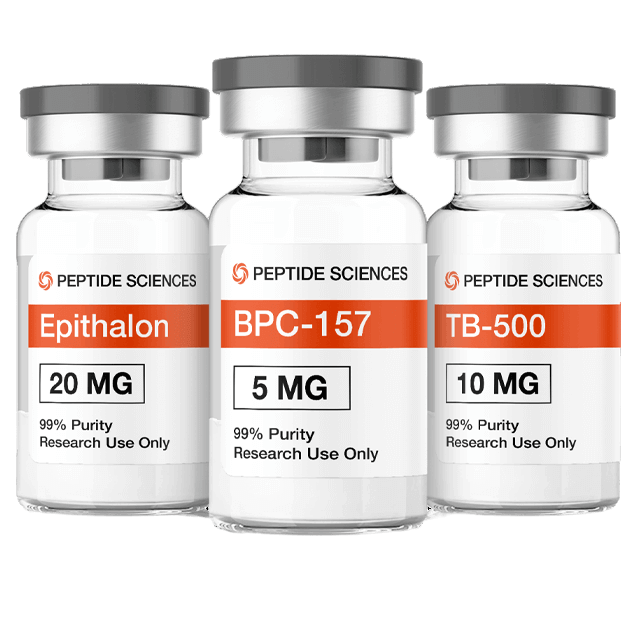
A common question we get: “Why does the 5mg vial of BPC-157 have less powder than the 5mg vial of TB-500?”
This is not an indicator of purity.
The “puck” (the solid powder) is mostly Mannitol (a filler used to stabilize the peptide). The actual peptide (5mg) is a microscopic amount—like a few grains of salt. The size of the puck depends on how much Mannitol was used in the freeze-drying process.
- Small Puck: Less filler.
- Big Puck: More filler.
- Both could contain exactly 5mg of active ingredient. Only HPLC testing reveals the truth.
The [Brand Name] Quality Guarantee
We know that trust is earned, not given. That is why we adhere to the strictest testing protocols in the UK market.
- Blind Testing: We send random vials from our stock to independent labs. We do not send “special” samples.
- Transparency: We publish the full, unedited PDF reports on every product page.
- Purity Standard: If a batch tests below 99%, we do not sell it. It is destroyed.
Frequently Asked Questions
Can I use a “RoidTest” kit at home for peptides?
No. Home testing kits (colorimetric reagents) can only tell you if a substance is present. They cannot tell you the purity or the dosage. They might turn the right color for a sample that is 20% pure and full of heavy metals.
Why are your prices higher than [Cheap Competitor]?
Testing costs money. Maintaining a sterile supply chain costs money. Replacing lost shipments costs money. We price our products to ensure we can continue delivering pharmaceutical-grade quality and guaranteed delivery to our UK customers.
[Medical Disclaimer Block]
The content provided in this article is for educational and informational purposes only. The products discussed are sold for laboratory research and development purposes. This content does not constitute medical advice.
